Client & Developer Collaboration Platform
Full-Stack Engineer
TL;DR
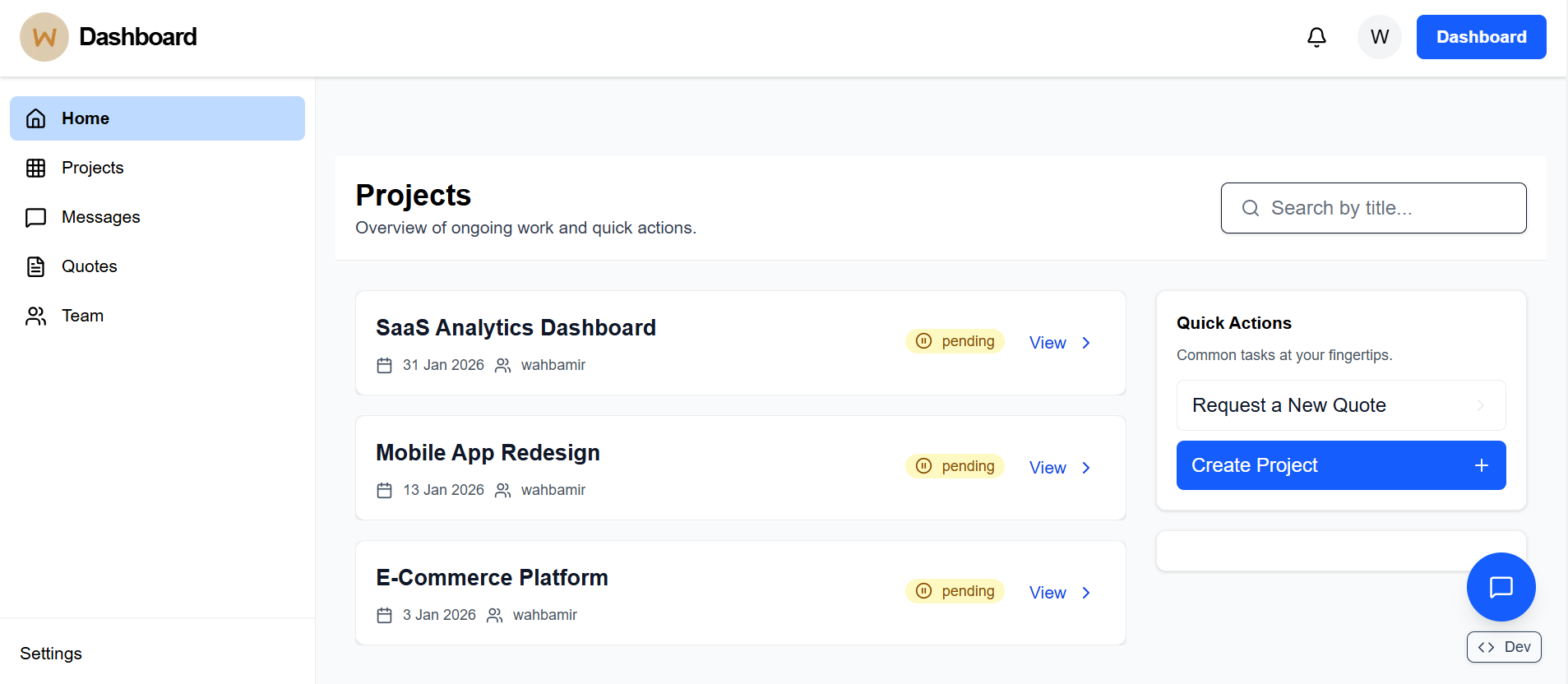
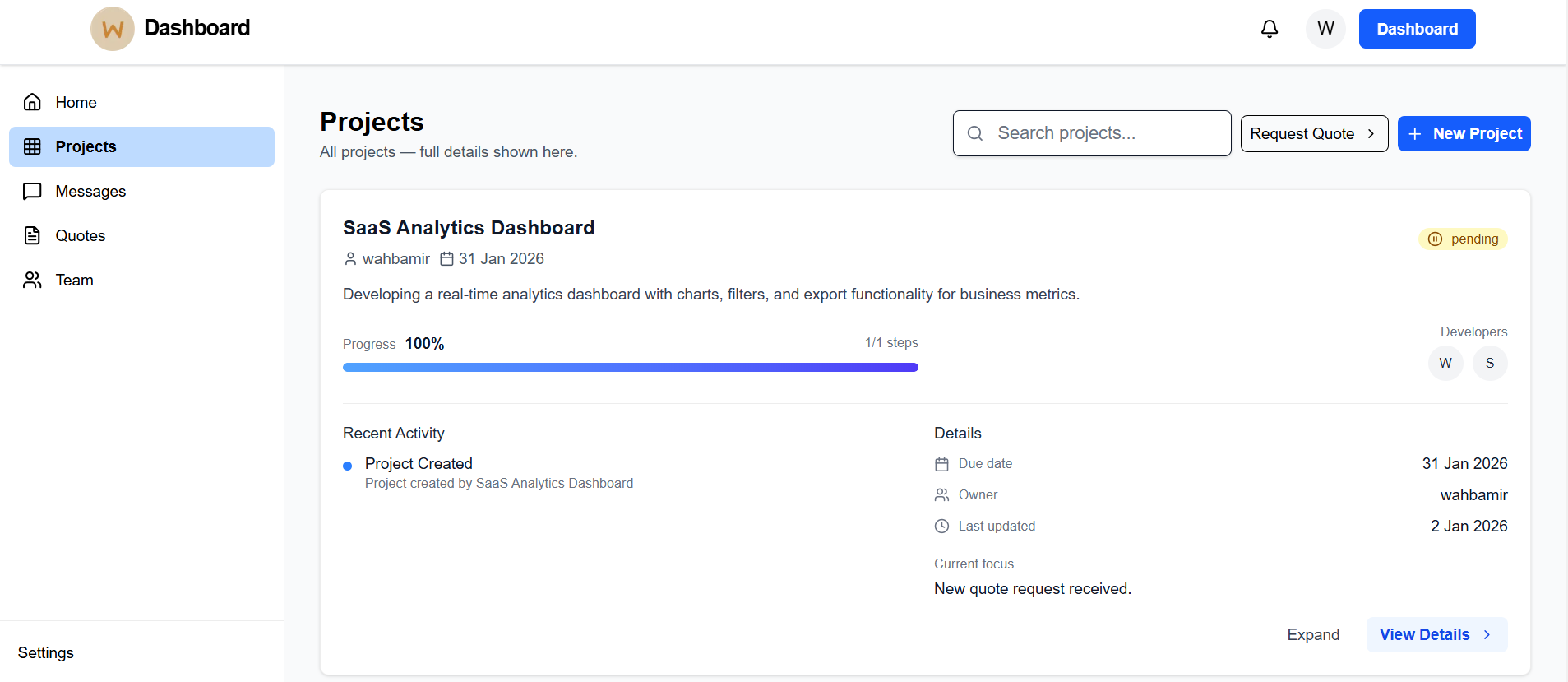
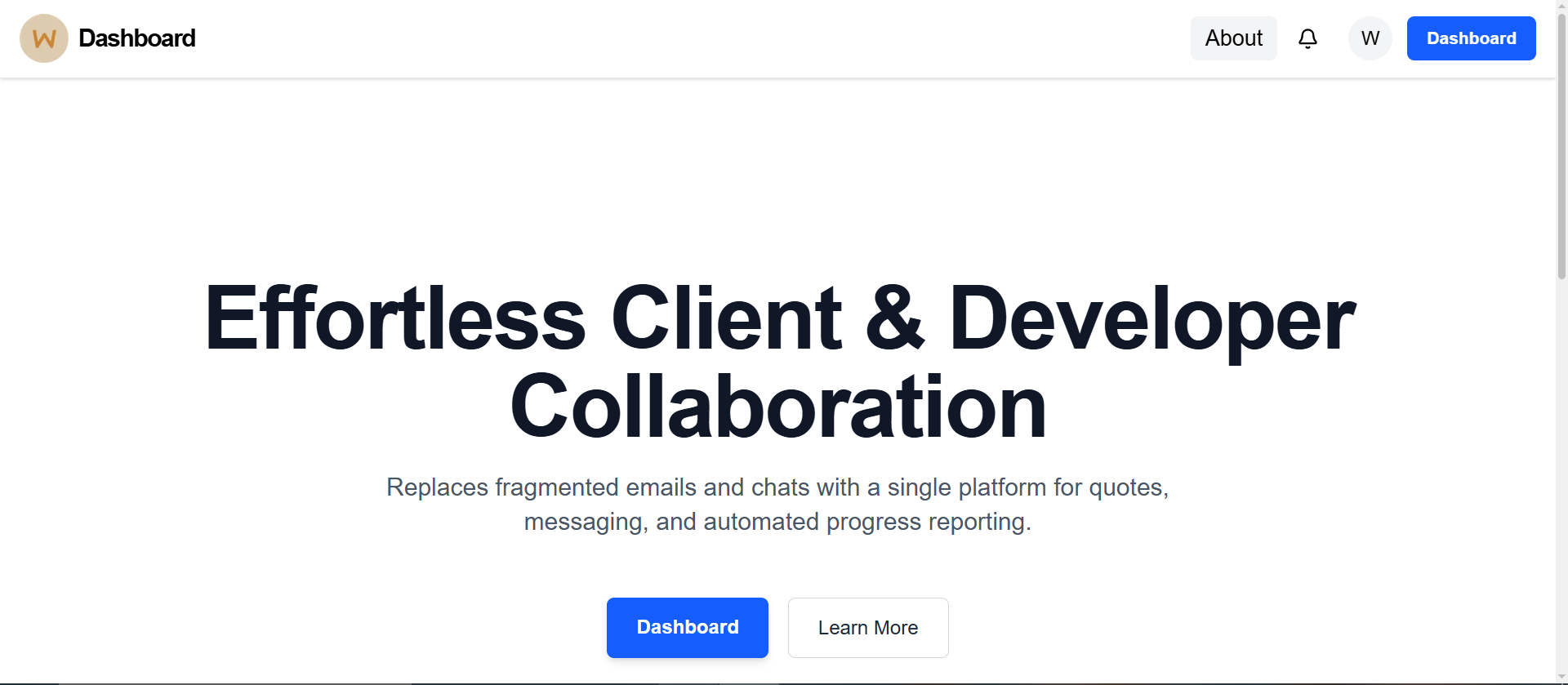
Built a single-platform collaboration tool that replaced fragmented email/chat processes and automated progress reporting — improving transparency and reducing manual status updates for developers and clients.
Tech Stack
Problem
Clients and developers relied on email, chat and spreadsheets to track work. This caused missed updates, unclear ownership, and frequent status-check requests.
Constraints
Tight timeline (MVP in 8 weeks), role-based access requirements, need for secure logins and enterprise-grade data isolation, and limited budget for external integrations.
My Role
Full-Stack Engineer — owned end-to-end design and implementation of the client & developer workflows, GitHub integration, and CI/CD automation.
Architecture
Single Next.js app serving client & dev experiences with serverless API routes. GitHub webhooks push events to a queue; worker processes map events to project activities and update project state in MongoDB. This keeps user-facing APIs fast and offloads heavy processing to background workers.
Approach
- Gathered feedback from 5 pilot clients to identify the most painful friction points
- Mapped user journeys for three personas: client, manager, and developer
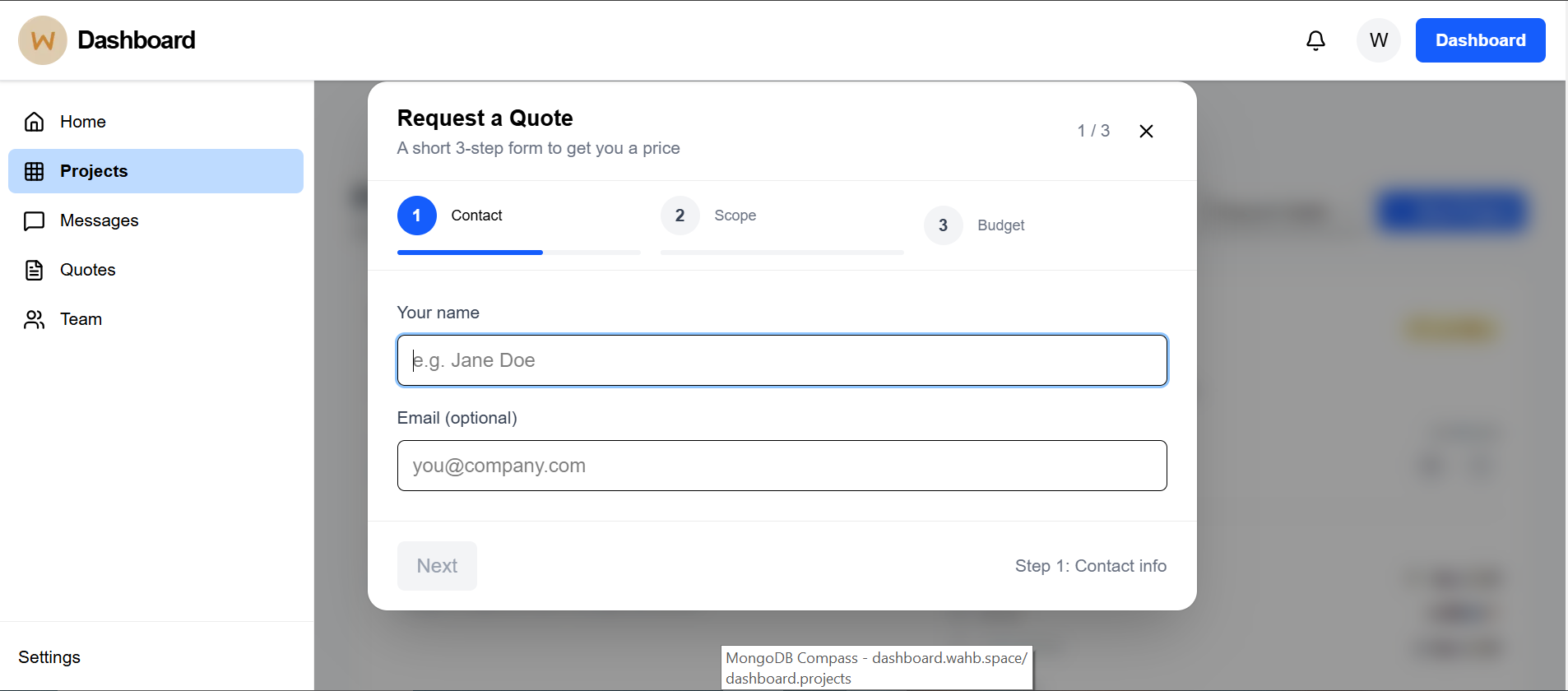
- Prioritized features into a tight MVP: quotes, messaging, progress tracking, GitHub sync
- Iterated with 1-week sprints and early feedback from two pilot clients before full launch
Responsibilities
- Designed UI/UX for client dashboard and developer workspace
- Implemented role-based access control and secure authentication
- Built GitHub -> platform automation to sync commits/PRs with project progress
- Implemented real-time notifications (in-app + email) and messaging
- Owned deployments and monitoring (automated builds and secure hosting)
Technical Solution
- Next.js + React for server-side rendered pages and fast UX
- Node.js API with role-based endpoints; MongoDB for flexible project data
- GitHub Actions + webhooks to automatically map commits/PRs to tasks and update progress
- Tailwind for consistent, responsive design and small CSS footprint
- Auth (JWT / secure cookies) and permission checks on every API call
Outcome
Clients reported clearer visibility and fewer status-check meetings; developers stopped doing manual update emails. The platform created a single source of truth for all project activity.
Proof Points
- Automated GitHub-linked progress reduced manual reporting work (see GitHub links).
- Pilot clients moved from weekly status calls to in-app updates.
Lessons Learned
- Start with one core workflow (quote → accepted → project) and automate the most painful manual step first.
- Push heavy integrations (webhook processing) to background workers to preserve UI responsiveness.
- Invest in clear distinctions between client-view and developer-view to reduce noise.
More Screenshots